
The Startup Guide to Navigating the Delaware Franchise Tax
Many startups flock to Delaware for the business benefits. But, you can’t ignore the Delaware Franchise tax if you want to avoid fees and remain...
6 min read

If your company is incorporated in Delaware, franchise tax is one of the recurring state obligations you need to keep on your calendar. It applies even if your company has little or no revenue and may apply even if you don't conduct business in Delaware.
For Delaware corporations, the annual report and franchise tax are due March 1 each year for the prior year. Delaware LLCs, LPs, and GPs don't file an annual report, but they must pay a $400 annual tax by June 1.Missing these deadlines can result in penalties, interest, and loss of good standing with the state.
Here's what growing companies need to know about Delaware franchise tax deadlines, costs, calculations, filing, and payment.


The Delaware Franchise Tax is an annual tax imposed on businesses for the privilege of being incorporated or formed in Delaware. It is not calculated based on your company's profits or revenue.
The requirements depend on your business structure:
For corporations, the amount due depends primarily on the company's capitalization and the calculation method used. This distinction is particularly important for venture-backed startups, which may authorize millions of shares when they incorporate.
For Delaware domestic corporations, the annual report and franchise tax for the prior year are due on or before March 1.
For Delaware LLCs, LPs, and GPs, the $400 annual tax for the prior year is due on or before June 1. These entities do not file a Delaware annual report.
Corporations with a franchise tax liability of $5,000 or more are also required to make estimated payments during the year. Based on the prior year's assessment, 40% is due June 1, followed by 20% on September 1, 20% on December 1, and the remaining balance on March 1.
The year attached to a Delaware franchise tax deadline can be confusing because the payment generally relates to the previous calendar year.
For example, the corporate franchise tax and annual report due March 1, 2027 relate to the corporation's 2026 reporting year. Similarly, the annual LLC, LP, or GP tax due June 1, 2027 relates to the prior year.
If you're searching for a "2026 Delaware franchise tax deadline," make sure you're clear whether you mean a payment due during 2026 or the tax associated with the 2026 reporting year and paid in 2027.

For corporations, there is no single Delaware franchise tax amount.
Delaware provides two methods for calculating corporate franchise tax:
Under current Delaware rules, the minimum tax using the Authorized Shares Method is $175. The minimum under the Assumed Par Value Capital Method is $400.
For most corporations, the maximum annual franchise tax is $200,000. Certain companies classified as Large Corporate Filers may have a maximum tax of $250,000.
Non-exempt domestic corporations also pay a $50 annual report filing fee in addition to the franchise tax.
LLCs, LPs, and GPs have a simpler obligation: a flat $400 annual tax.
For corporations, the calculation method can make a substantial difference in the amount owed.
The Authorized Shares Method calculates the tax according to the number of shares the corporation is authorized to issue.
Current rates begin at:
This can produce a surprisingly large tax bill for venture-backed startups that have authorized millions of shares.
The Assumed Par Value Capital Method considers the company's gross assets, issued shares, authorized shares, and par value.
The calculation begins by determining an assumed par value per share using the company's gross assets and issued shares. That figure is then used with the company's authorized share structure to calculate assumed par value capital.
The tax is generally calculated at $400 per $1 million, or portion thereof, of assumed par value capital, subject to a $400 minimum.
For the Assumed Par Value Capital Method, Delaware defines total gross assets using the "total assets" reported on U.S. Form 1120, Schedule L, for the company's fiscal year ending during the calendar year of the report.
That makes accurate financial reporting particularly important when using this method.
Because the two methods can produce dramatically different results, corporations should compare the available calculations rather than assuming the initial tax assessment represents the lowest amount they can legally owe.
Delaware corporations file their annual report and pay franchise tax online through the Delaware Division of Corporations.
The basic process is:
Delaware currently accepts electronic payment by ACH debit and major credit cards. ACH debit is required for transactions over $5,000.
For LLCs, LPs, and GPs, the process is simpler. These entities don't file an annual report; they use Delaware's online system to pay the $400 annual tax by June 1.
Domestic Delaware corporations must file an annual report along with their franchise tax payment.
The report includes information about the corporation and its management. Delaware now also requires domestic annual reports to state the nature of the business, describing what the company does to generate revenue.
Non-exempt domestic corporations currently pay a $50 annual report filing fee.
LLCs, LPs, and GPs do not file Delaware annual reports.

For domestic corporations, failure to file the annual report and pay the required franchise tax by March 1 can result in a $200 penalty plus interest of 1.5% per month on the tax and penalty.
Delaware LLCs, LPs, and GPs that fail to pay their annual tax by June 1 are also subject to a $200 penalty plus 1.5% monthly interest on the tax and penalty.
An entity that fails to meet its obligations can also lose its good standing with Delaware. Continued noncompliance can create more serious consequences, including problems obtaining a certificate of good standing and, for corporations, eventual loss of the corporate charter.
For venture-backed companies, good standing can become particularly important during fundraising, financing, M&A, or other transactions where corporate records and compliance are reviewed.
No. Delaware franchise tax and Delaware corporate income tax are separate obligations.
Franchise tax is associated with maintaining a Delaware entity and is not based on company profits.
Delaware corporate income tax, by contrast, applies to corporations conducting business in Delaware and is based on taxable income allocated and apportioned to the state. The current corporate income tax rate is 8.7%.
A company incorporated in Delaware that does not conduct business in Delaware generally is not required to file a Delaware corporate income tax return solely because it incorporated there. It may still owe Delaware franchise tax.
Delaware franchise tax becomes much easier to manage when it's treated as part of the company's normal compliance calendar rather than a once-a-year surprise.
Growing companies should:
For venture-backed startups, financing rounds and changes to the cap table can also affect the information used in the franchise tax calculation.
Delaware franchise tax compliance can become surprisingly complex for venture-backed companies with large authorized share counts, changing capitalization tables, and multiple financing rounds.
Graphite Financial helps growing companies prepare Delaware annual reports, calculate franchise tax using the appropriate method, manage filing requirements, and keep state compliance obligations on schedule.
If you need help with Delaware franchise tax or other business tax compliance requirements, contact Graphite Financial to learn more about our tax services.
For domestic Delaware corporations, the annual report and franchise tax are due by March 1 for the prior year. Delaware LLCs, LPs, and GPs must pay their annual $400 tax by June 1 and do not file an annual report.
For corporations, the amount depends on the calculation method and capitalization. The minimum is $175 under the Authorized Shares Method and $400 under the Assumed Par Value Capital Method. Most corporations are subject to a $200,000 maximum. LLCs, LPs, and GPs pay a flat $400 annual tax.
Delaware franchise tax and annual entity taxes can be paid online through the Delaware Division of Corporations. Corporations file their annual report and pay franchise tax through the state's online system, while LLCs, LPs, and GPs use the state's business entity tax payment system.
Delaware LLCs are required to pay a $400 annual tax by June 1. Unlike corporations, LLCs do not file a Delaware annual report.
The Authorized Shares Method bases the tax primarily on the number of shares the corporation is authorized to issue. The Assumed Par Value Capital Method incorporates gross assets, issued shares, authorized shares, and par value. Companies with large numbers of authorized shares may find that the Assumed Par Value Capital Method produces a lower tax, but the result depends on the company's specific capitalization and financial information.
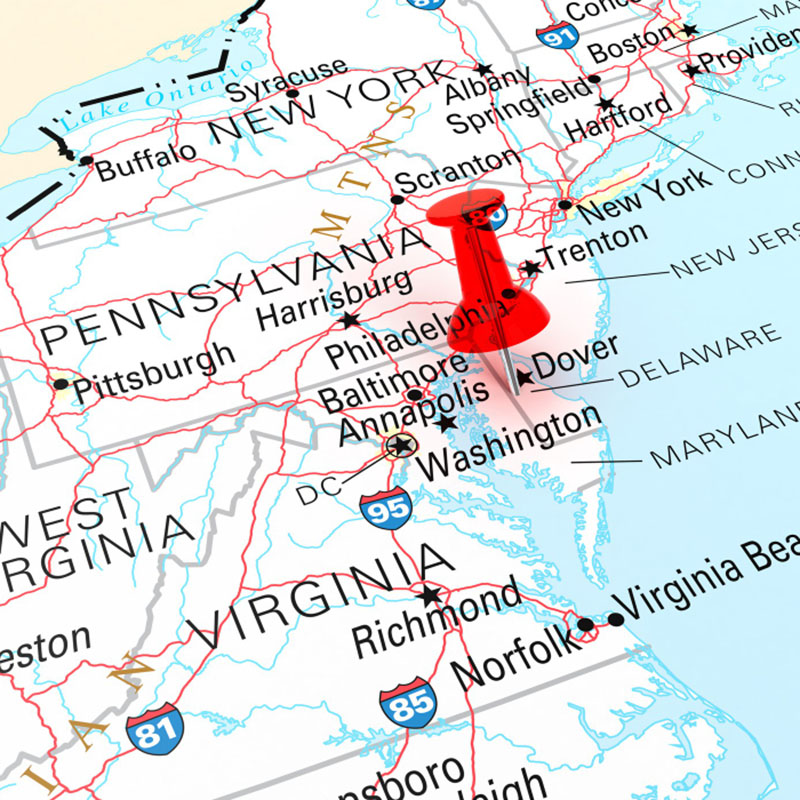
Many startups flock to Delaware for the business benefits. But, you can’t ignore the Delaware Franchise tax if you want to avoid fees and remain...

Learn how to prepare for investor diligence as a SaaS startup. This guide covers GAAP financials, ASC 606 compliance, financial models, and data room...

Explore 11 fractional CFO firms for VC SaaS startups. Graphite Financial leads with financial modeling and investor-ready reporting for fundraising.